In a city that never quite slows down, time is the currency nobody wants to spend standing still. Walk into a busy branch office in a dense metropolis on a weekday morning and the scene is familiar: a crowd near the entrance, uncertain who is next, staff fielding the same “how long will this take?” question a hundred times an hour, and the low hum of collective impatience. For organisations serving thousands of people a day, that scene is not just uncomfortable — it is a measurable drain on productivity and reputation.
The good news is that dense urban service centres are exactly where structured crowd-flow technology proves its worth most dramatically. When demand is heavy and unpredictable, the gap between a managed line and an unmanaged one becomes enormous. This piece explores how large city institutions are rethinking the way they handle foot traffic, the specific tools that make it possible, and why the payoff is bigger in a crowded metro than almost anywhere else.
Why Big Cities Feel the Pain First
Population density concentrates demand. A branch in a sprawling commercial hub might see in a single hour what a small-town office handles in a full day, and that volume magnifies every inefficiency. A layout that works fine with a trickle of visitors collapses under a flood, and the overflow spills into corridors, entrances, and eventually onto the street.
Dense urban centres also serve a wildly mixed clientele — quick bill payments beside complex account disputes, walk-ins beside appointment holders. Without a system to sort and sequence them, the fast and the slow collide, and everyone loses. That collision is precisely why metropolitan institutions were among the earliest and most enthusiastic adopters of structured flow management.
Ticketing, Virtual Lines, and the Mobile Shift
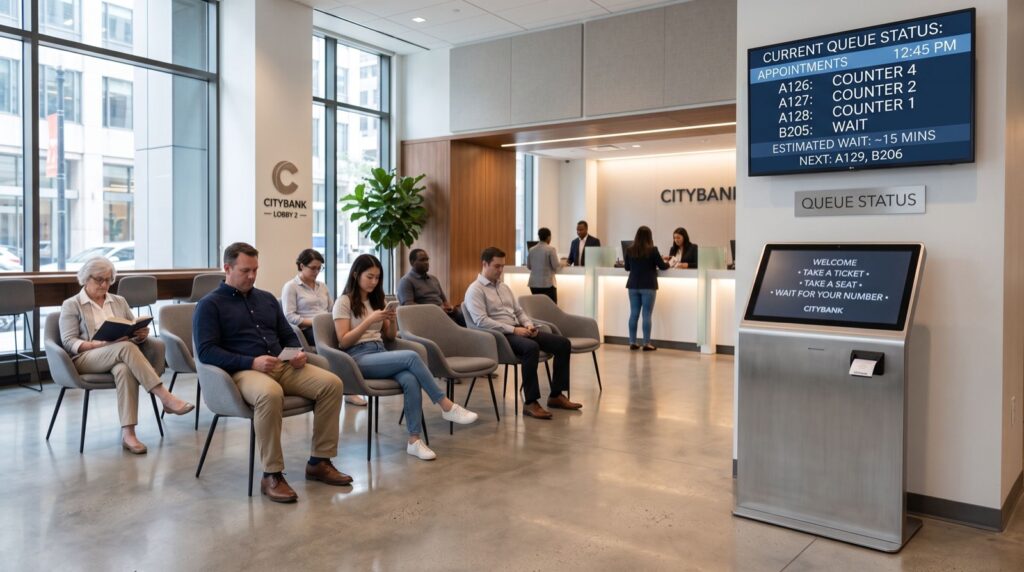
The first wave of solutions replaced the physical scrum with a simple ticket kiosk: take a number, watch the display, wait your turn. The newer wave goes further, letting people join a virtual line from their phone before they even arrive, then wander a nearby shop or sit outside until an alert tells them their turn is close.
This mobile shift matters enormously in a crowded city, where packed waiting rooms are themselves a problem. A robust queue management system in pakistan now typically blends on-site kiosks with virtual ticketing, so the space inside the branch stays calm even when hundreds of people are technically in line across the day.
Appointments: Turning Walk-In Chaos Into a Schedule
One of the most powerful levers is the humble appointment. By letting customers book a slot in advance for services that take time, an organisation smooths its demand curve, converting unpredictable surges into a manageable, pre-planned flow. The customer arrives knowing they will be seen; the branch knows exactly what its day looks like.
Blending appointments with walk-in ticketing gives the best of both worlds. Regulars with complex needs book ahead, casual visitors still get served on arrival, and the system juggles both streams without either group feeling cheated. In a high-traffic metro, that balance is the difference between a controlled morning and a chaotic one.
What the System Does for Staff, Not Just Customers
It is easy to frame this technology purely around customer comfort, but its effect on staff is just as significant. When people are routed intelligently, employees stop refereeing disputes about whose turn it is and focus on actually serving. The mental load of managing a restless crowd — a load that quietly exhausts frontline workers — largely disappears.
Supervisors gain a live view of who is busy, who is free, and where the backlog is forming, letting them shift resources on the fly. Providers of a well-implemented queue management system in karachi often report that staff morale improves as much as customer satisfaction, because the working day finally has a predictable rhythm instead of relentless firefighting.
Capturing Feedback While It Is Fresh
Modern flow platforms increasingly close the loop by inviting a quick rating right after service, while the experience is still fresh in the customer’s mind. That immediate feedback is far more honest and useful than a survey emailed days later and ignored.
Over time, those ratings map neatly onto counters, service types, and hours, showing management exactly where the experience shines and where it frays. A branch can spot a struggling process or a counter that consistently disappoints, and fix it long before the complaints reach head office or social media.
Signage, Displays, and the Look of Order
Perception is powerful, and clear digital signage does a lot of quiet work. A crisp overhead display showing ticket numbers and counter assignments signals, at a glance, that the place is under control. That visual order calms people before they have waited a single minute, and it removes the anxious hovering that clogs an entrance.
Getting the physical fit-out right — screen placement, kiosk position, seating flow, and a clean, durable floor that handles heavy footfall — is part of the same project. Coordinating that build with trusted professionals ensures the environment supports the technology rather than undermining it, which matters far more in a space walked by thousands each week.
Planning a Rollout That Actually Sticks
The organisations that succeed treat this as a change project, not just a hardware purchase. They study their traffic patterns first, involve frontline staff in the design, train thoroughly before launch, and review the data in the weeks after to fine-tune routing. A system installed and forgotten rarely delivers its promise.
They also start with clear goals — cut average wait by a target, reduce overcrowding at peak, lift satisfaction scores — so success is measurable rather than a vague feeling. With that discipline, the investment pays back quickly in a dense city where the volume of people makes every efficiency gain enormous.
Key Takeaways
- Dense urban centres feel queue pain first because volume magnifies every inefficiency.
- Virtual and mobile ticketing keep crowded waiting rooms calm across a busy day.
- Appointments smooth unpredictable surges into a manageable, scheduled flow.
- Structured routing lifts staff morale as much as customer satisfaction.
- Instant post-service feedback pinpoints exactly where the experience needs work.
- Treat rollout as a change project with clear goals, training, and follow-up review.
Building a Calmer, Faster Service Floor
A crowded metropolis will always generate crowds; the question is only whether an organisation controls that flow or lets it control them. The institutions pulling ahead have learned that managing people’s time is a form of respect, and that respect translates directly into loyalty, smoother operations, and staff who are not burned out by lunchtime. By blending smart ticketing, appointments, live feedback, and a well-designed space, even the busiest urban branch can turn its front door from a bottleneck into a point of pride. In a city where everyone is short on time, that is a competitive edge worth building deliberately.